Initiative

The GLOMUS network for higher education in the performing arts.
*
The GLOMUS network for higher education in the performing arts. *
The GLOMUS network serves as a global platform for the exchange of artistic practices, opinions, and experiences in higher education in the performing arts. The GLOMUS network aims to develop interactions and collaborative projects between the institutions globally and regionally to promote:
Intercultural exchange and knowledge-sharing in the field of higher education within music, dance and performing arts.
Artistic interaction, development, and innovation
Capacity building and organizational development.
Collaboration in the field of artistic, pedagogical, and academic research
The GLOMUS network is based on the following values and goals:
GLOMUS acknowledges the value of cultural diversity in the artvforms and institutions, and the value of promoting a global mindset among students, members of faculty and staff members.
GLOMUS acknowledges the values of inclusion, equality, and environmental and financial sustainability.
GLOMUS member institutions aim to play a proactive role in the development of the network and to work for cultural collaboration and exchange on both a global and regional level.
GLOMUS promotes and supports mobility among students, members of faculty and staff and aspires to leave sustainable, lasting impact on local communities hosting Camps.
GLOMUS promotes the concepts of student-centered learning and Artistic Citizenship
GLOMUS strive for diverse geographically representation and balance among its members, and in all its activities.
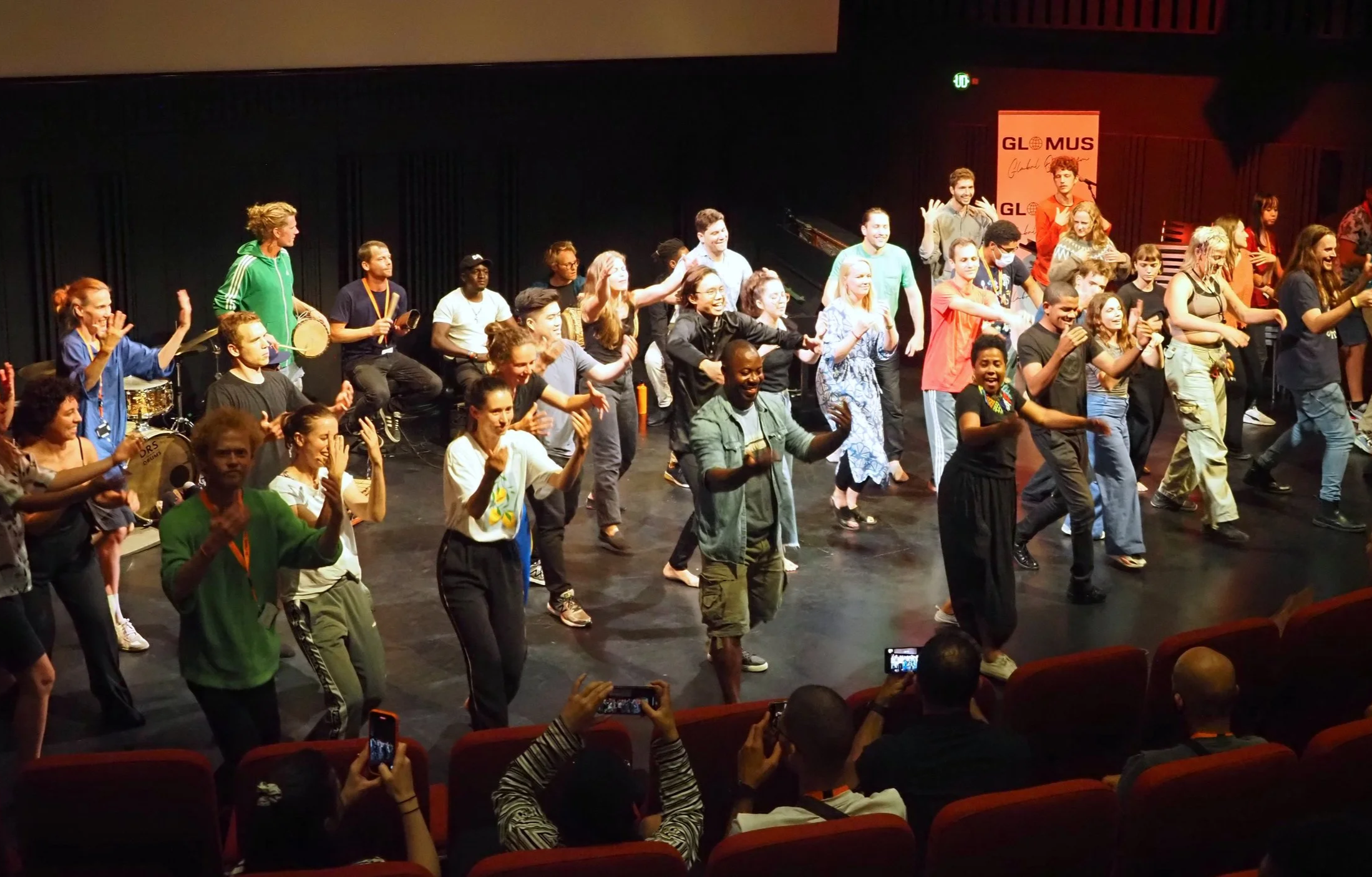
GLOMUS organizes a biennial Camp that provides a forum for artistic and academic interaction among the member institutions, their staff, and students. The Camp format consists of workshops, lectures, performances, peer-to-peer interactions, discussions and collaborations. The Camp is hosted by a member institution.
GLOMUS promotes inter-institutional agreements and collaborations between members.
GLOMUS hosts a webpage and platforms on social media to provide communication among the GLOMUS member institutions and information between GLOMUS and the public
GLOMUS is organized in the following way:
General assembly comprised of partner Camp participants.
Executive board comprised of one member from each member institution
Camp advisory board comprised of members appointed by the GLOMUS Camp host.
Working group comprised of two permanent members (DASPA and RAMA), the host institution and 3 elected members
Content group comprised of members appointed by GLOMUS Camp institution
GLOMUS aspires to maintain a simple and transparent organizational structure based on consensus and mutual understanding.
The GLOMUS General Assembly (GA) is in session at the end of each GLOMUS Camp, normally in connection with the Leadership forum.
Members of the GA are the leaders or other representatives appointed by the institutions attending the present GLOMUS Camp.
The GA discusses matters important to the strategic development of the network.
The GA selects the next GLOMUS Camp Host institution.
Each institution present at the GA has one vote. Decisions are generally made by simple majority, however, changes in The GLOMUS Articles of association requires 2/3 majority.
The GA is chaired by the Camp host institution.
The GLOMUS Working Group is responsible for the daily running of the network and functions as the network’s secretariat. The Working Group provides consultative support to the Host Institution in preparing the Camps.
The Working Group consists of six members: two permanent members (RAMA and DASPA), three members from member institutions elected with consideration to balance and diversity by the GA, and one member from the institution hosting the first coming camp.
The Working Group makes decisions in all financial matters in connection with the daily running of the network and the Camps.
The Working Group can invite new member institutions to be approved by the Executive board.
Camp Advisory Board gives advice to Camp Host Institution on overall programming, logistics and accommodations.
The GLOMUS executive board meets biannually online. The board makes decisions on the acceptance of new members and relevant strategic issues.
Meetings in the executive board are called three weeks in advance.
The Camp host institution forms an internal organization that prepares and executes the biennial Camp.
The Host institution is responsible for appointing the advisory board and one or more content groups among GLOMUS members.
The host institution is responsible for securing transparency and broad and equal geographical representation in decision-making regarding the artistic and academic programs.
The GLOMUS network is comprised of partner institutions.